boot 2026: Record Numbers or a True Turning Point?
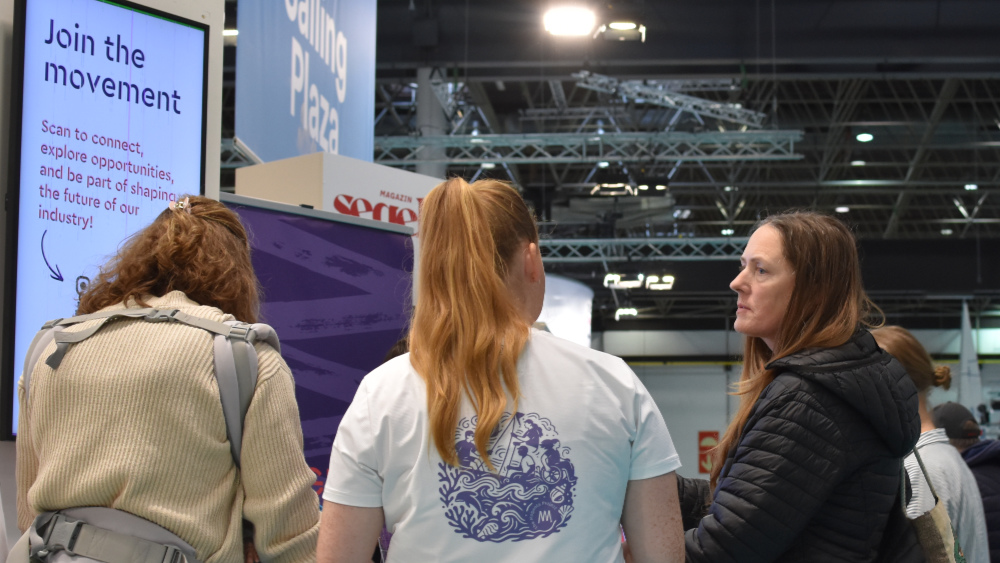
Join the Movement": Annie Lush (left), a supporter of The Magenta Project (center), and Maja Jordan (right) engaged in discussion at the stand in Hall 15. An image symbolizing the industry’s transformation – set directly against the backdrop of the traditional trade press © 2026 Pressebüro Dietrich / Foto: Axel Dietrich
boot 2026 has successfully concluded after nine days. While the positive trends offer confidence for the months ahead, a look beyond the economic indicators reveals a different perspective.
DÜSSELDORF – The trade press is taking stock: With over 200,000 visitors and a significant increase in the sailing sector, boot Düsseldorf 2026 concludes as a “powerful driver of momentum.” Yet, while the economic figures are promising, a closer look at Hall 15 reveals that the actual renewal of the maritime industry goes deeper than mere sales statistics.
Visibility on the Live Stage and Technical Depth
A major highlight for the visibility of women in yachting was the live talk on the stage in Hall 15. In conversation with sailing journalist Andreas Kling, British professional sailor Annie Lush not only shared his immense experience from the Ocean Race but also captivated the audience with his characteristic humor. It was one of those moments at the trade fair that underlined the future viability of sailing and demonstrated the importance of professional role models on such a platform.
However, this raises a central question of perception: Why does such a groundbreaking momentum receive almost no mention in the official post-fair reporting so far? If one reads the report in the current March issue of “segeln” magazine (on page 12), for instance, one searches in vain for this impulse under the heading ‘boot Düsseldorf 2026.’ The question remains whether this is an unconscious “blindness” to the cultural shift in the industry, while the focus remains primarily on traditional economic growth figures.
”Sail. Connect. Grow.”: Knowledge Transfer at All Levels
The fact that this was about more than just selective attention was proven by the seminars held under the motto “Sail. Connect. Grow.”. These were conceived and implemented by Carolin Junker (Point of Sailing Marketing GmbH), who held strategic responsibility in her role as Project Manager for Entertainment & Program Planning. The program followed an integrative approach, engaging sailors at all levels: from practical workshops for beginners to intensive exchanges for experienced sailors. This mix of solid grassroots work and high-end expertise demonstrates how modern development in sailing can be practically implemented today.
The Facts of the Global Survey
This presence was flanked by the work of The Magenta Project. Their global surveys paint a clear picture of the structural challenges within sailing: 80% of women surveyed report discrimination. This data illustrates why the program in Hall 15 was much more than just a side event.
The fact that boot Düsseldorf has embraced and visibly amplified the impulses from the female community was evident in the density of professional expertise on-site. Alongside Annie Lush, long-standing companions of the trade fair such as Mareike Guhr, as well as Emily Penn, contributed their extensive experience to the discourse. This targeted transfer of expertise and personal experience on the stage in Hall 15 marks a fundamental step for the industry. A momentum that was impossible to miss on-site. We, however, find ourselves asking: where is this reflected in current reporting?
sailgoddess: The Bridge Between Vision and Reality
As a supporter and coordinator of press relations for sailgoddess in the DACH region, I closely accompanied this dynamic on-site. For Maja Jordan and the entire project, it is clear: economic tailwind is good, but a sustainable “course for the future” requires more than just sold boats.
Maja Jordan is performing grassroots work here that we have rarely observed in this form. She seeks to practically support women in their entry into the sport and their maritime sovereignty, building empowerment structures where access is traditionally difficult. Jordan is by no means the only female skipper; there are many experienced women in this role. However, while most work as lone fighters in traditionally male-dominated structures, proving themselves daily, Jordan takes a different path: she is attempting to establish a structure that strengthens women so they no longer have to hit invisible walls as isolated individuals—whether as beginners or professionals.